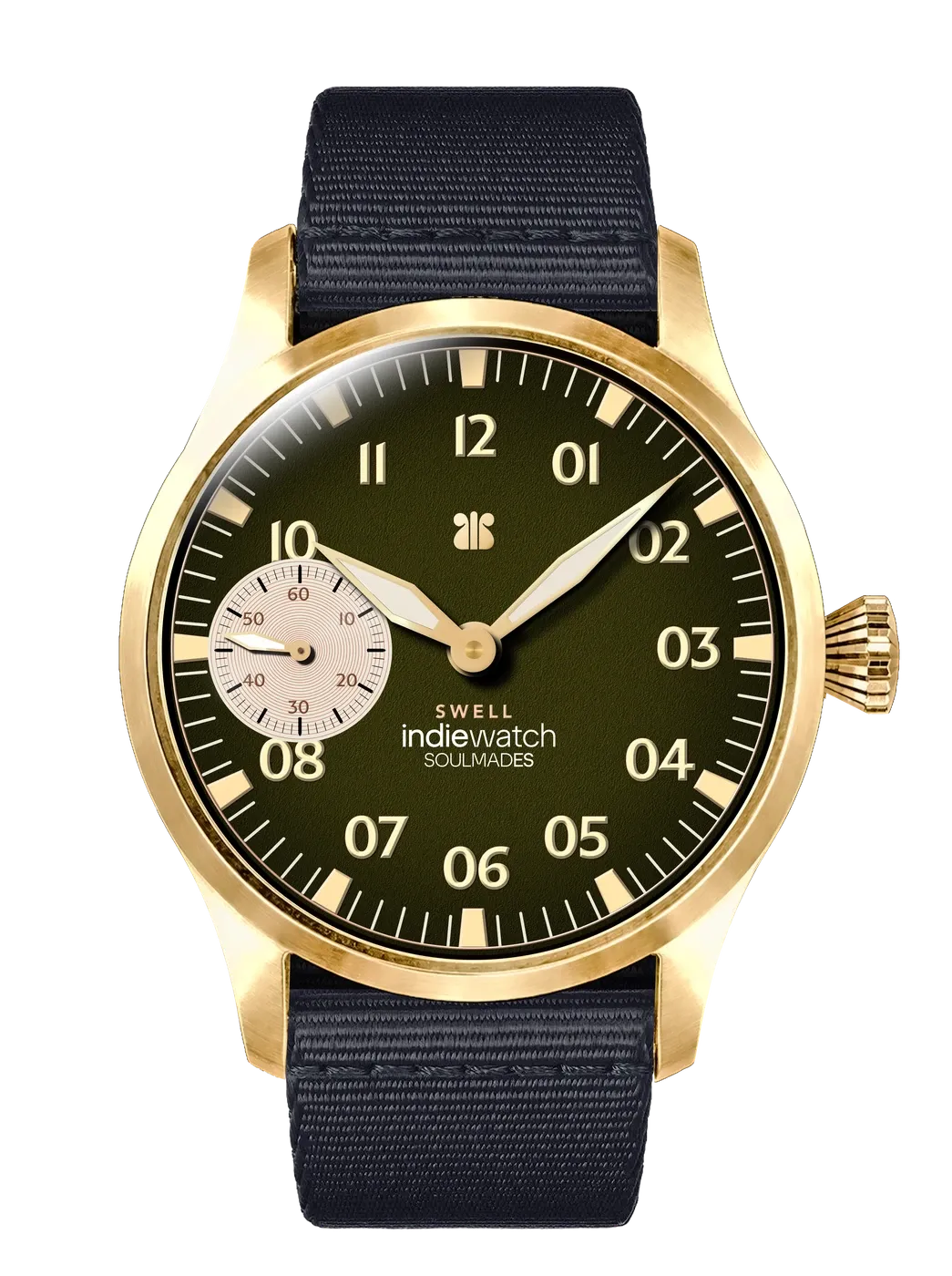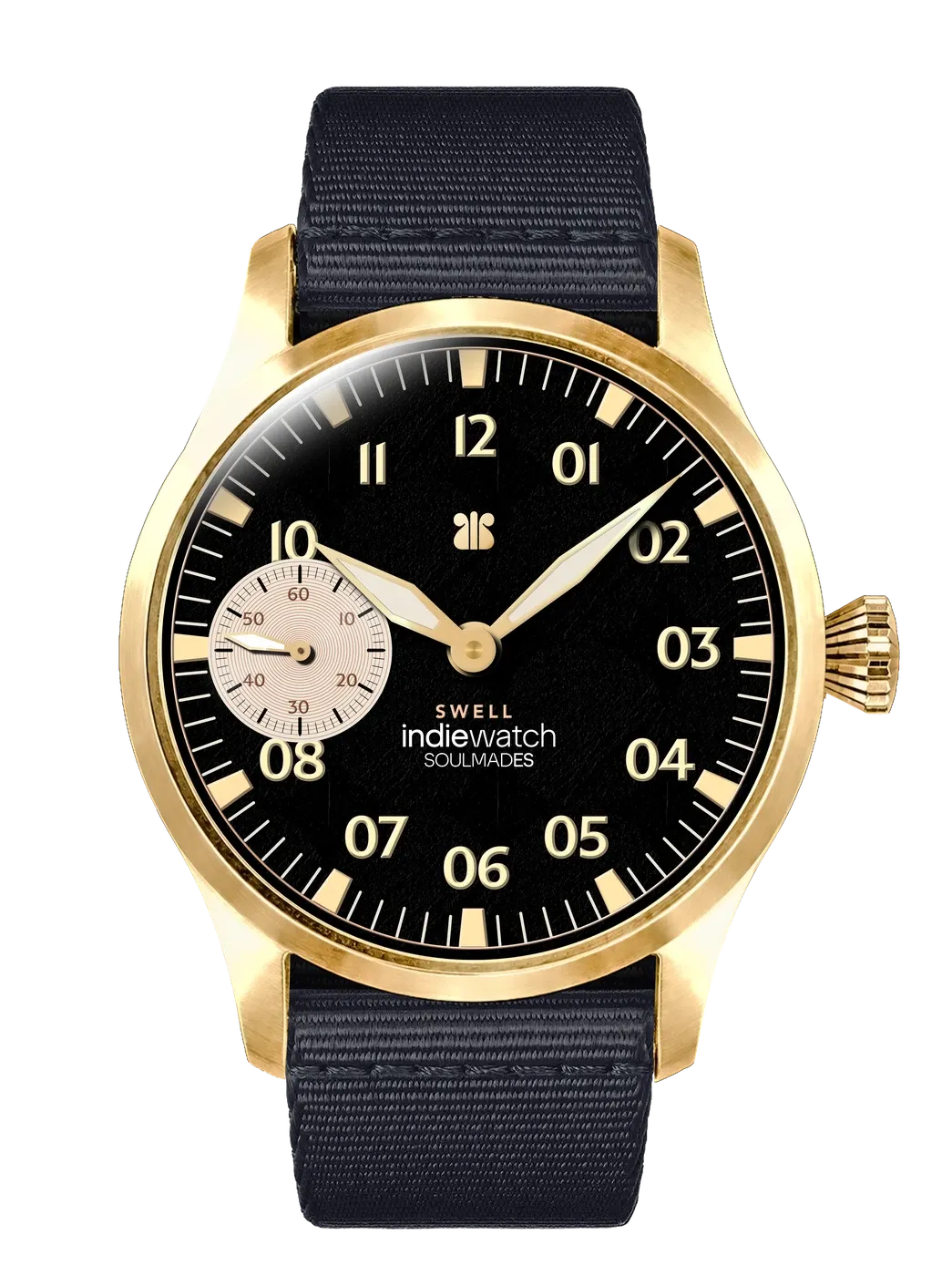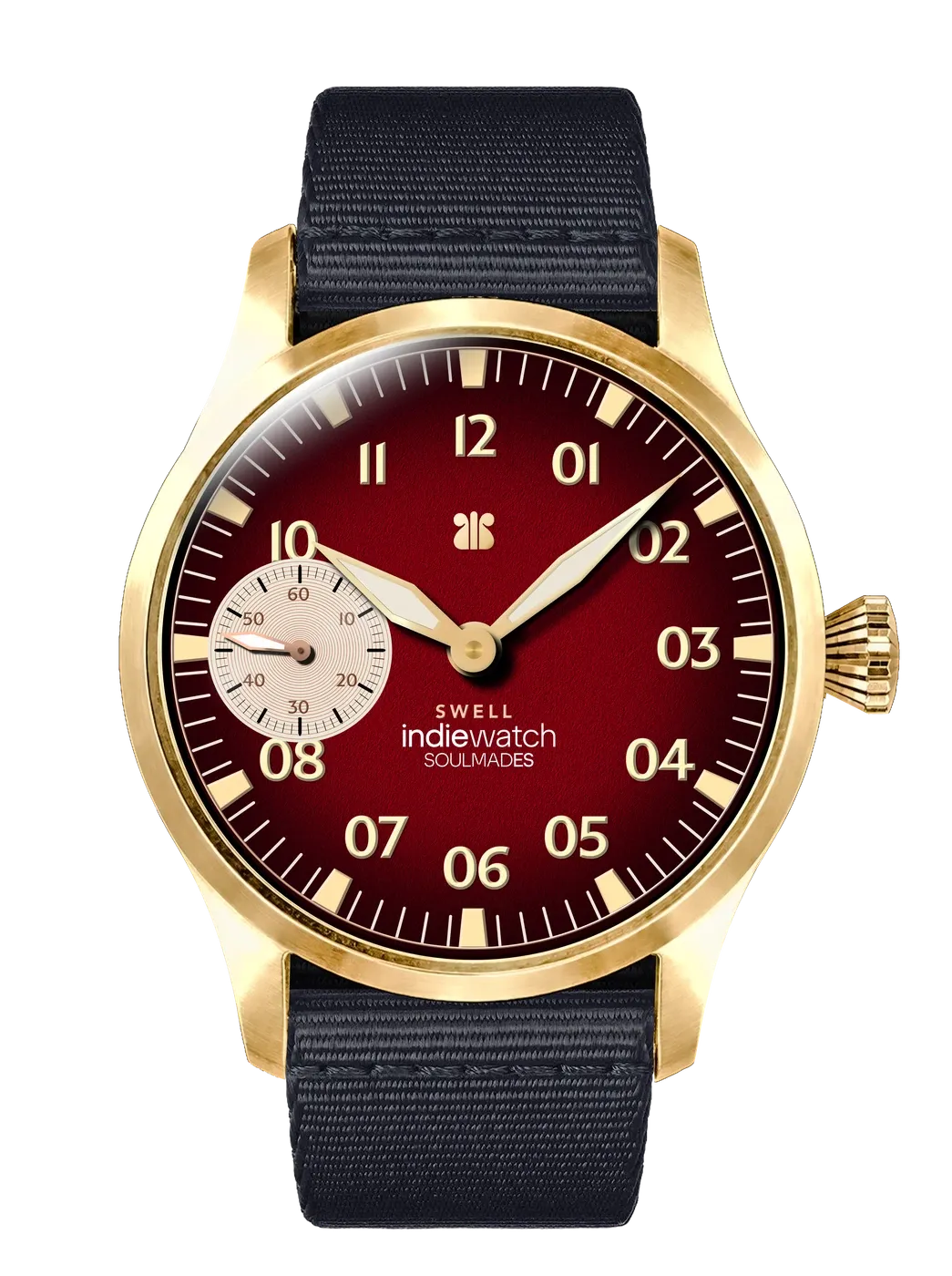
Included strap — Nylon strap · Negro · without logo · gold buckle

“He achieved it with a rotor that turned on its own, driven by the air”

— Swell Manifesto · Groundswell

SPECIFICATIONS

Technical specifications

What we know about the 131, stated plainly. And what is not yet settled, stated just as plainly

Movement

CALIBRE
Seagull ST3600
TYPE
Hand-wound mechanical
FUNCTIONS
Hours and minutes · small seconds at 9 o’clock
FREQUENCY
21,600 vibrations per hour · six beats per second
DATE
No date window
DESIGN
Madrid · IndieWatch

Case

MATERIAL
Steel with 24K gold plating
DIAMETER
42 mm
THICKNESS
To be confirmed
LUG WIDTH
22 mm
CRYSTAL
Sapphire
CASEBACK
Sapphire crystal · the movement on display
CROWN
Large and fluted, to be turned even with gloves on

Dial

COLOUR
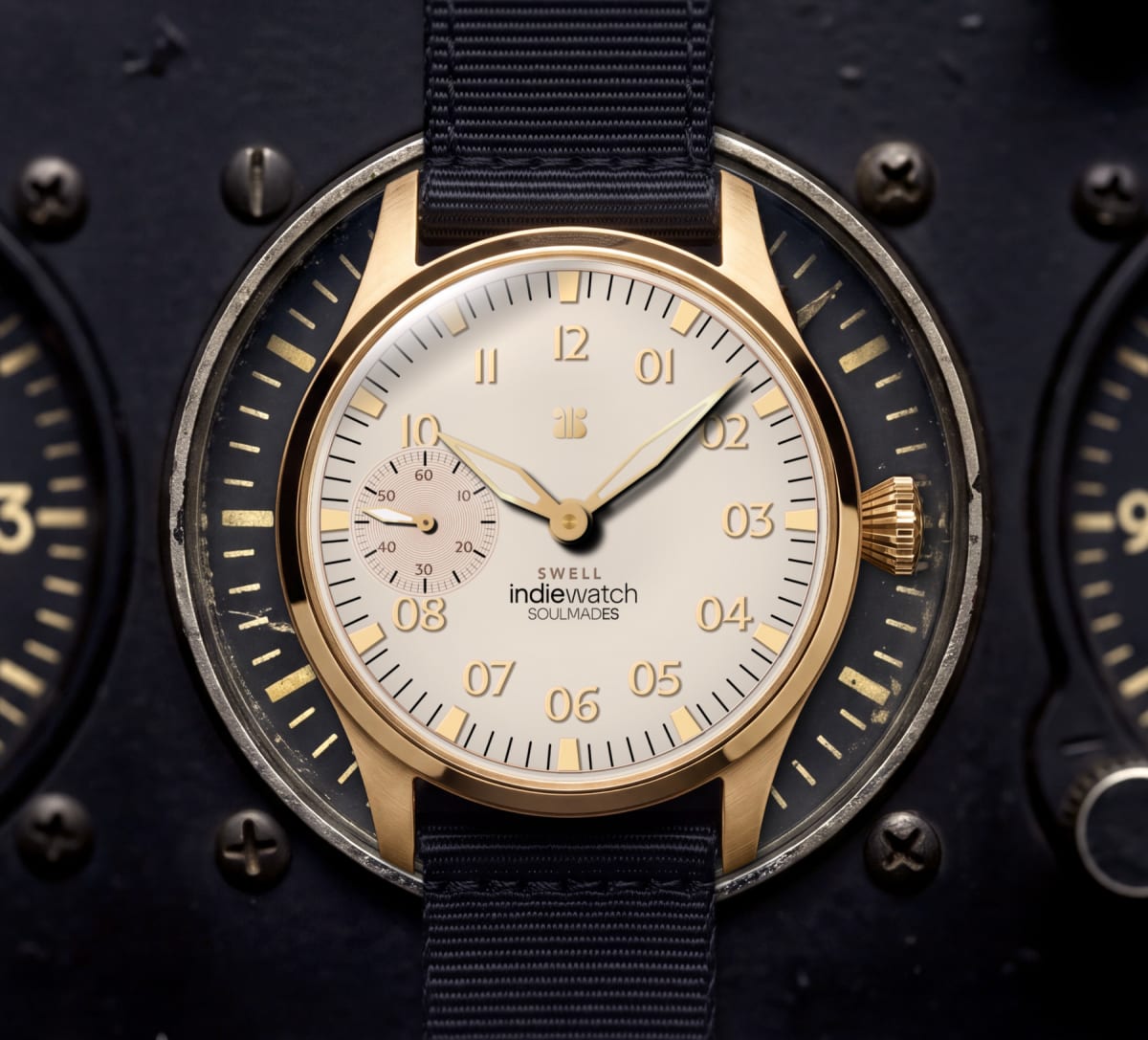
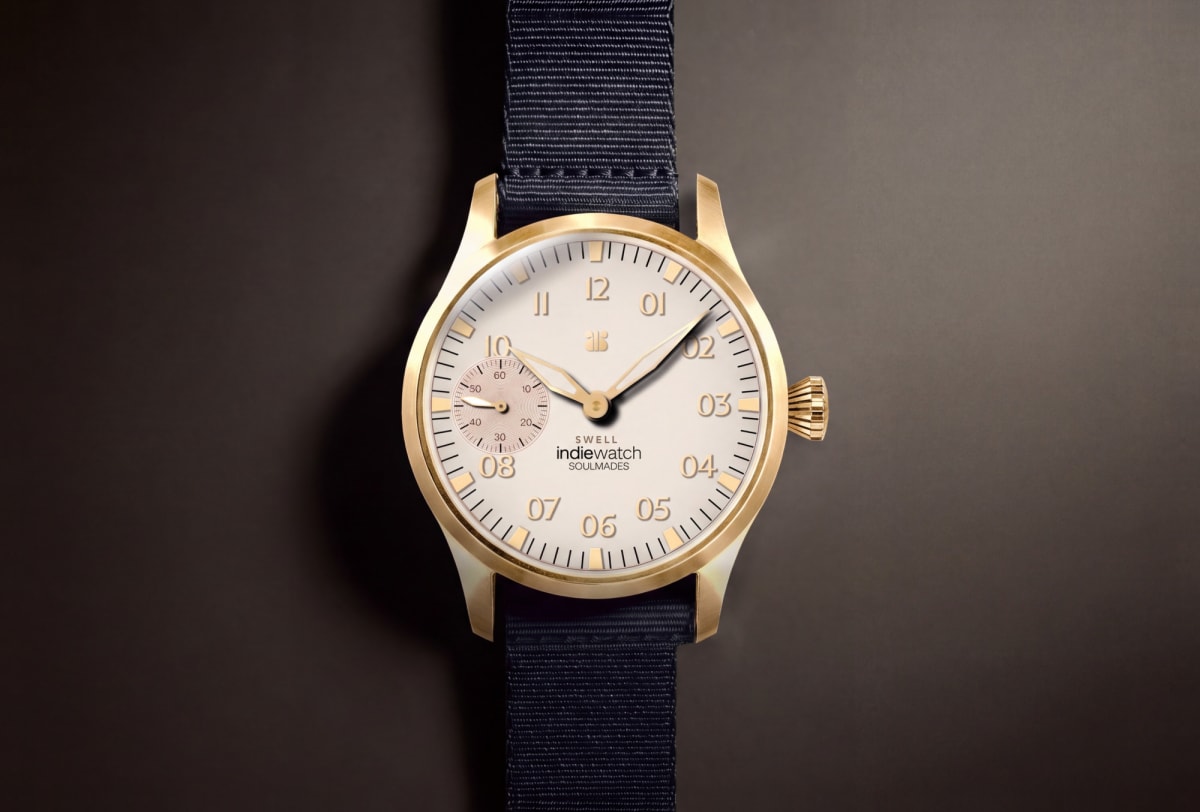
Ivory with a very soft fumé · applied gold numerals and batons · minute track in black
FINISH
Lacquer over a grained base · fumé towards the edge · railway minute track
NUMERALS
Two-digit numerals from 01 to 12, omitting the 09 · a faceted baton at every hour
SECONDS
Flat small seconds at 9 o’clock · snailed with concentric grooves
EMBLEM
Applied butterfly beneath the 12 · “SWELL” and “indiewatch SOULMADES” below the centre

Strap and buckle

SUPPLIED
Two-piece nylon, black
WIDTH
22 mm
BUCKLE
Gilt pin buckle
ALSO AVAILABLE
Leather NATO · black leather · aged leather in chocolate · black Cordura
IndieWatch Trencadís Autogiro watch · lifestyle 1
IndieWatch Trencadís Autogiro watch · lifestyle 2
IndieWatch Trencadís Autogiro watch — Forty-two millimetres
THE CASE · 42 MM

Forty-two millimetres

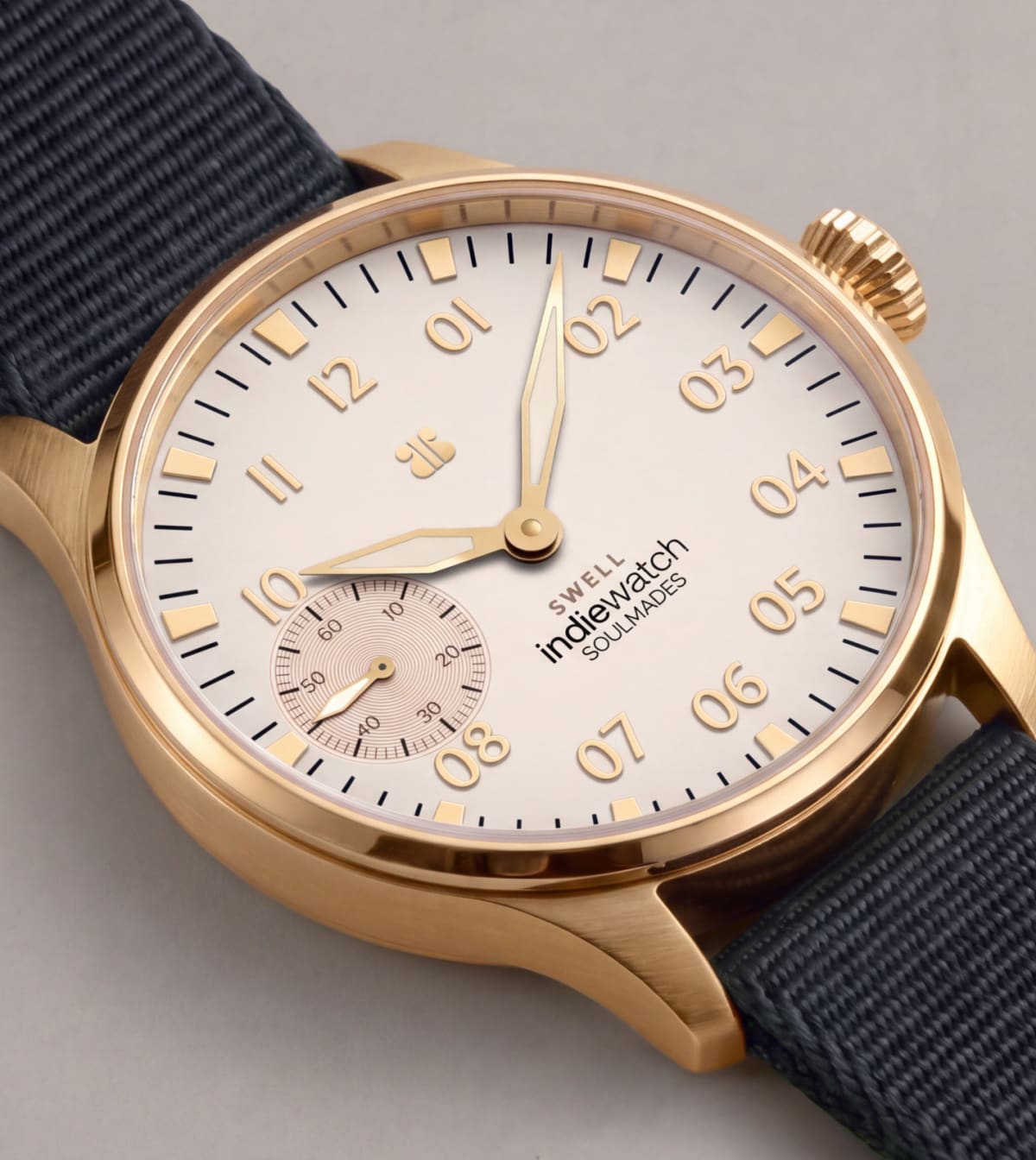
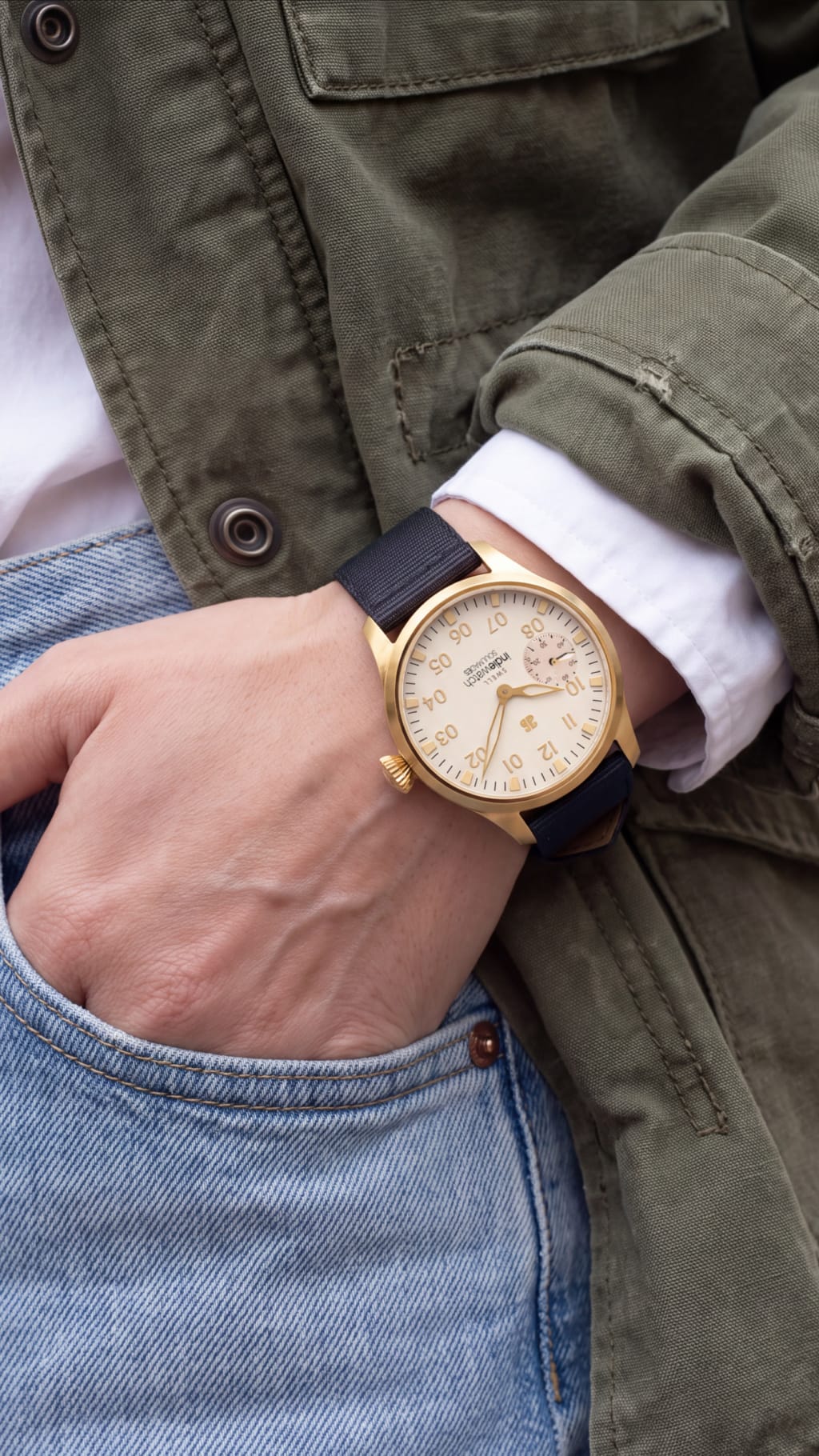
A 42 mm round case in steel with 24 K gold plating, the proportions of a pilot’s watch, read at a single glance. The large, fluted crown turns readily even with cold fingers. At the back, a sapphire caseback reveals the mechanical movement

IndieWatch Trencadís Autogiro watch — The paper of old photographs
THE DIAL

The paper of old photographs

Ivory lacquer over a grained base, with a fumé so soft it shows only at the edge, like the photographic paper of the day. Eleven two-digit numerals and a faceted baton at every hour, applied in gilt metal, with the railway minute track in black. At 9 o’clock, the flat small seconds, snailed with concentric grooves, beats six times a second

Trencadís sketch
IndieWatch Trencadís Autogiro watch — SPANISH AVIATION · 1911 → 2026
SPANISH AVIATION · 1911 → 2026

A rotor
that turned on its own

In January 1923, at Getafe, the autogiro of Juan de la Cierva took to the air. A twenty-seven-year-old engineer, he had set out to build a machine that could fly slowly without falling from the sky. He succeeded with a rotor that turned on its own, driven by the air, while a conventional propeller drew the machine forward. The first models overturned on take-off; the answer lay in articulated blades that rose and fell as they turned, a solution later inherited by the helicopter