S113-KS-NV · EL COPILOTO
El Copiloto
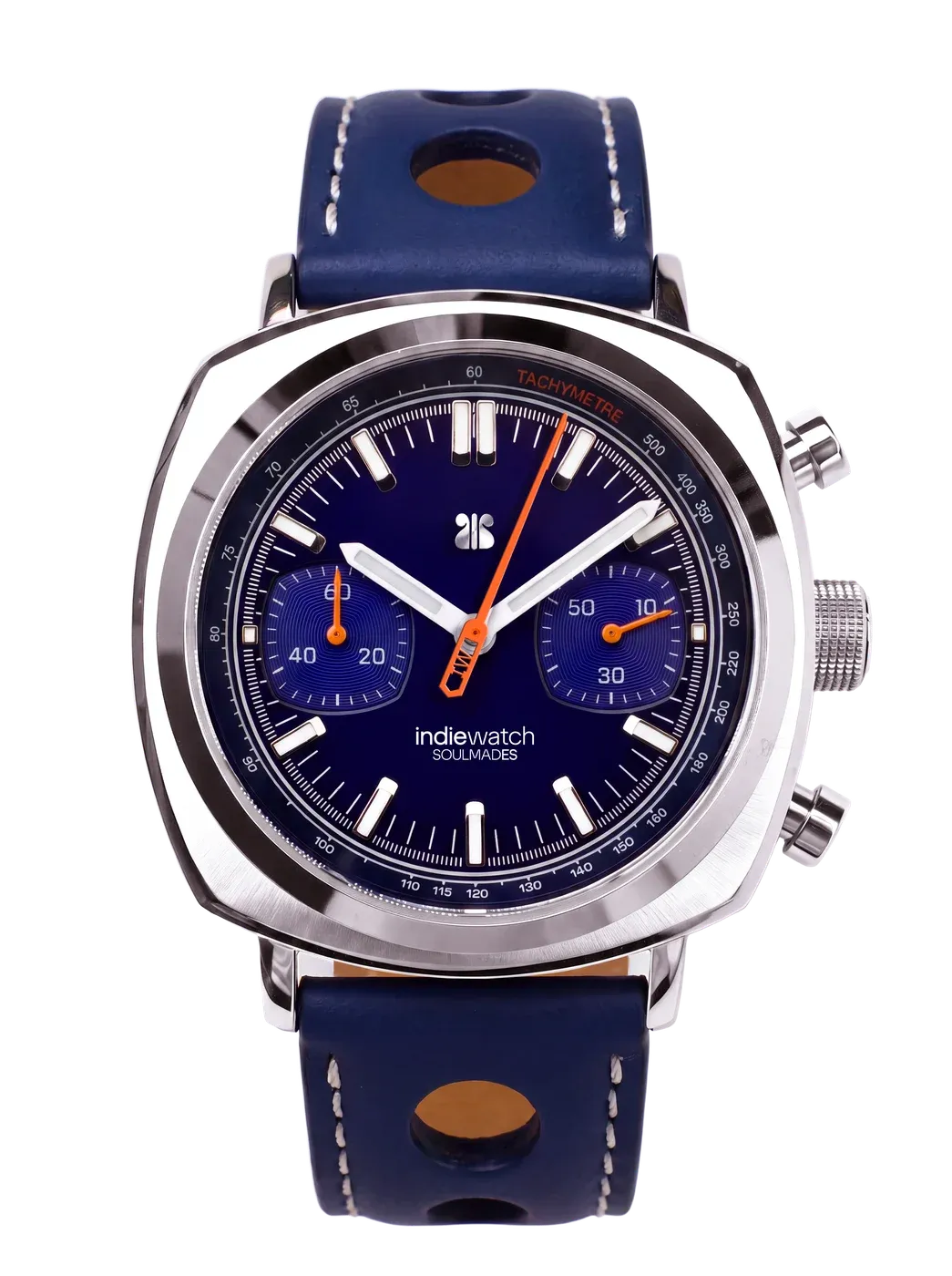
Monochrome navy-blue dial, orange chronograph hand and a tachymetric scale running from 500 to 60. Navy Zuoletán strap. Blue for the road book; orange, the pencil that marks the bend.
VIEW MODEL →
STRUM SERIES 113 · FOUNDING SERIES · 5 MODELS
The Golden Age of Mechanics. Designed and hand-assembled in Spain.
DISCOVER THE COLLECTIONTHE MANIFESTO
“There was a time when the avant-garde of the world’s motoring spoke Spanish. In the workshops of Madrid and Barcelona time was sculpted by hand.”
Pegaso, Barreiros, ENASA, the Automóvil Club prototypes — the white coat, the slide rule, millimetric tolerances achieved by hand. Light alloys, tubular chassis, bodywork sculpted with the hammer. Those workshops did not build cars: they signed manifestos.
The Strum Serie 113 does not look to the racetrack. It looks to the workshop. It is the watch they would have worn themselves — stainless steel cushion case, sapphire crystal, Japanese Miyota 6S21 quartz chronograph, assembled by hand in Spain. One piece at a time.

Cushion case in stainless steel with polished flanks and softened contours. The crown bears the house’s historic emblem — the very same as that worn by the first 113. Chronograph pushers of firm response: one hears the click of a living mechanism.
THE ENGRAVING
Every engraving begins the same way: two axes, a circle and a ruler resting on the paper. Then come the Jarama grandstand, car no. 113 and the four words that identify the piece.
Once the drawing is complete, the paper fades away and only the steel remains. This is how the case back of each Strum Serie 113 comes into being, one by one.
FROM SKETCH TO ENGRAVING · THE CASE BACK, DRAWN AND ENGRAVED


The Technical Specification
S113-KS-NV · EL COPILOTO
Monochrome navy-blue dial, orange chronograph hand and a tachymetric scale running from 500 to 60. Navy Zuoletán strap. Blue for the road book; orange, the pencil that marks the bend.
VIEW MODEL →S113-X-PD · EL CRONOMETRADOR
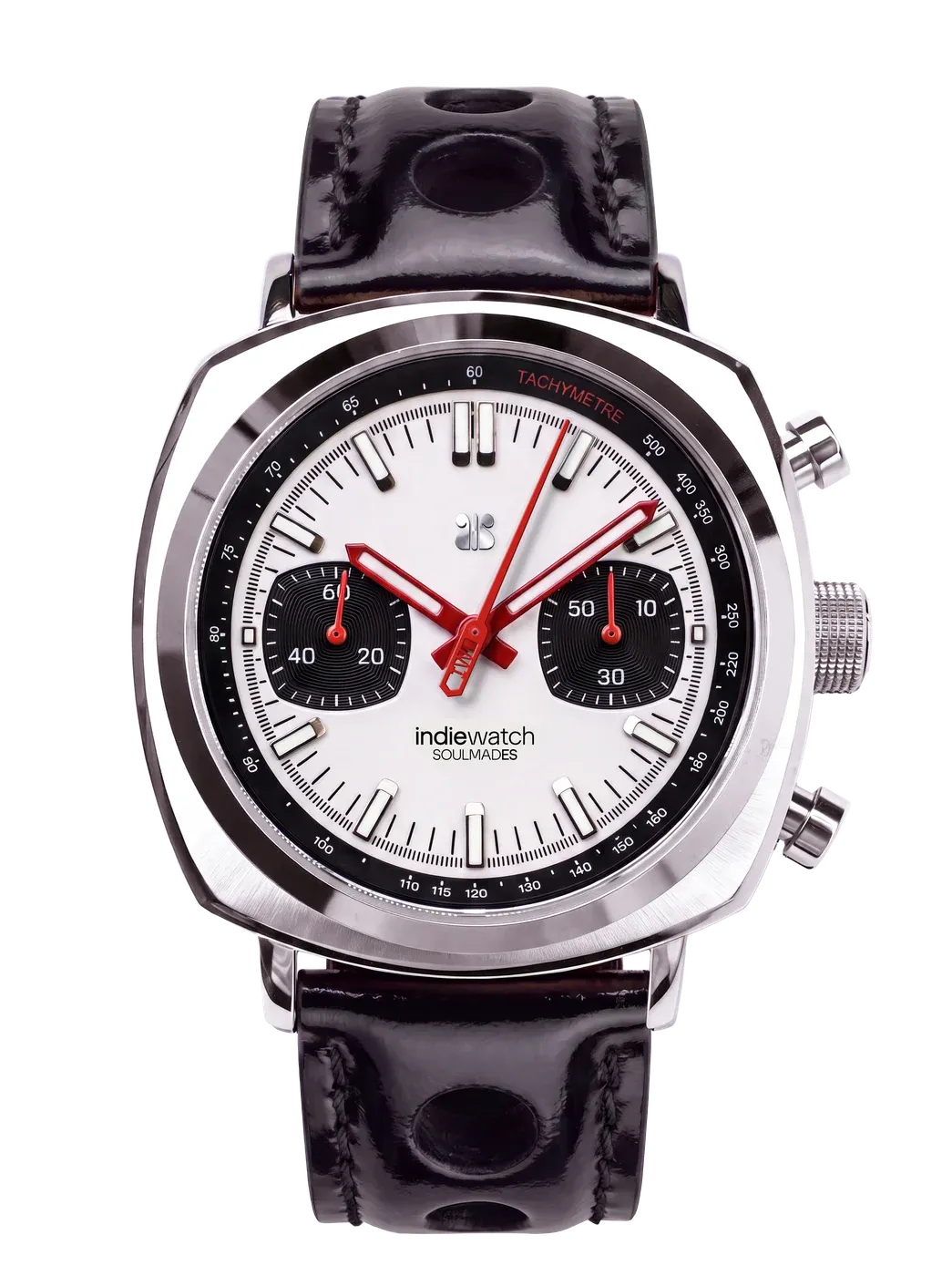
White panda dial with black sub-dials and red hands. Black Zuoletán strap. The absolute legibility of the one who measures, not the one who races.
VIEW MODEL →S113-MXK-GD · EL GENTLEMAN
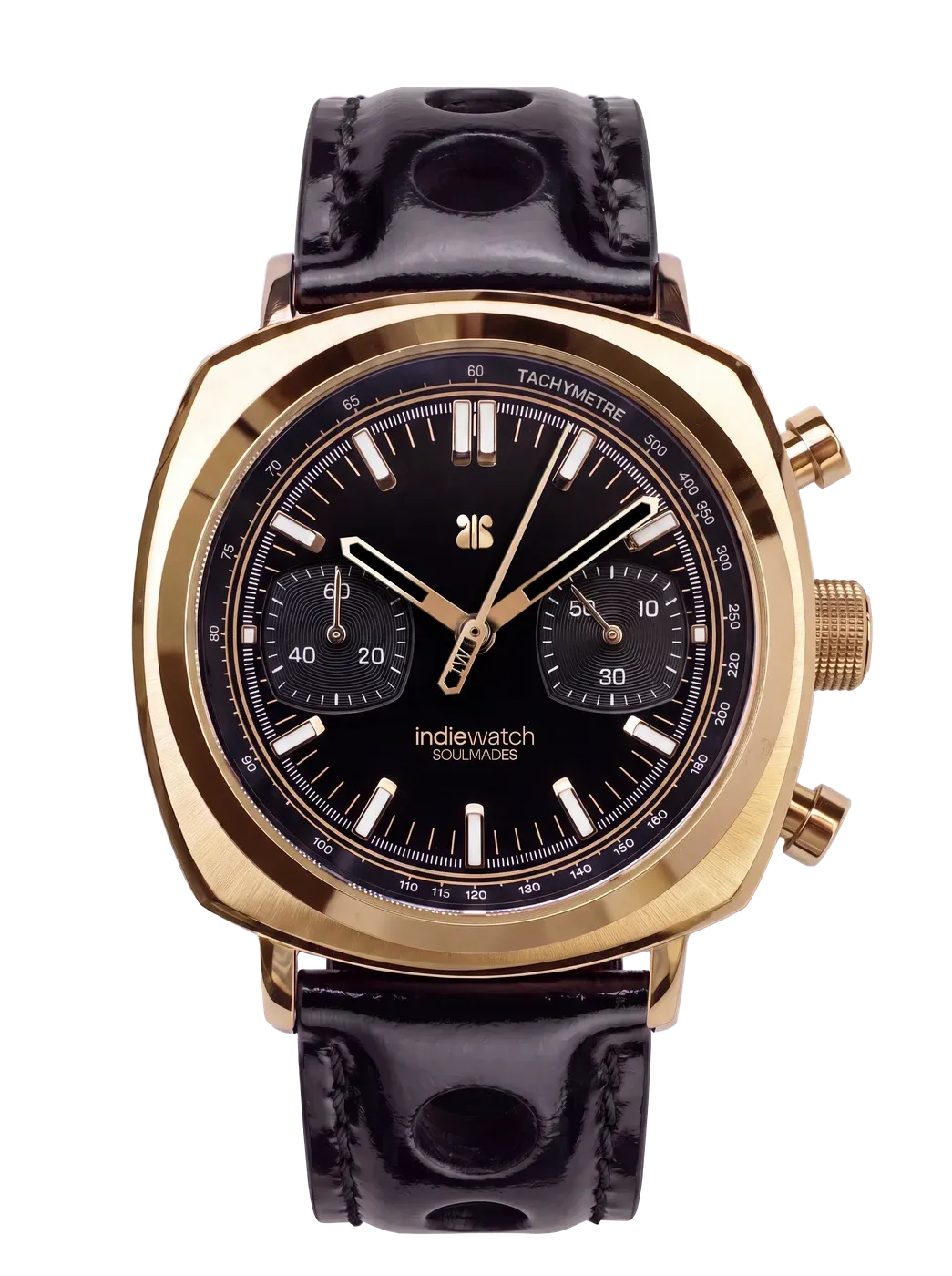
Golden case over a black dial, with gilt chronograph hands. Black Zuoletán strap. The watch of the owner who parked his Pegaso outside the Automóvil Club.
VIEW MODEL →S113-KUV-GR · EL DISEÑADOR
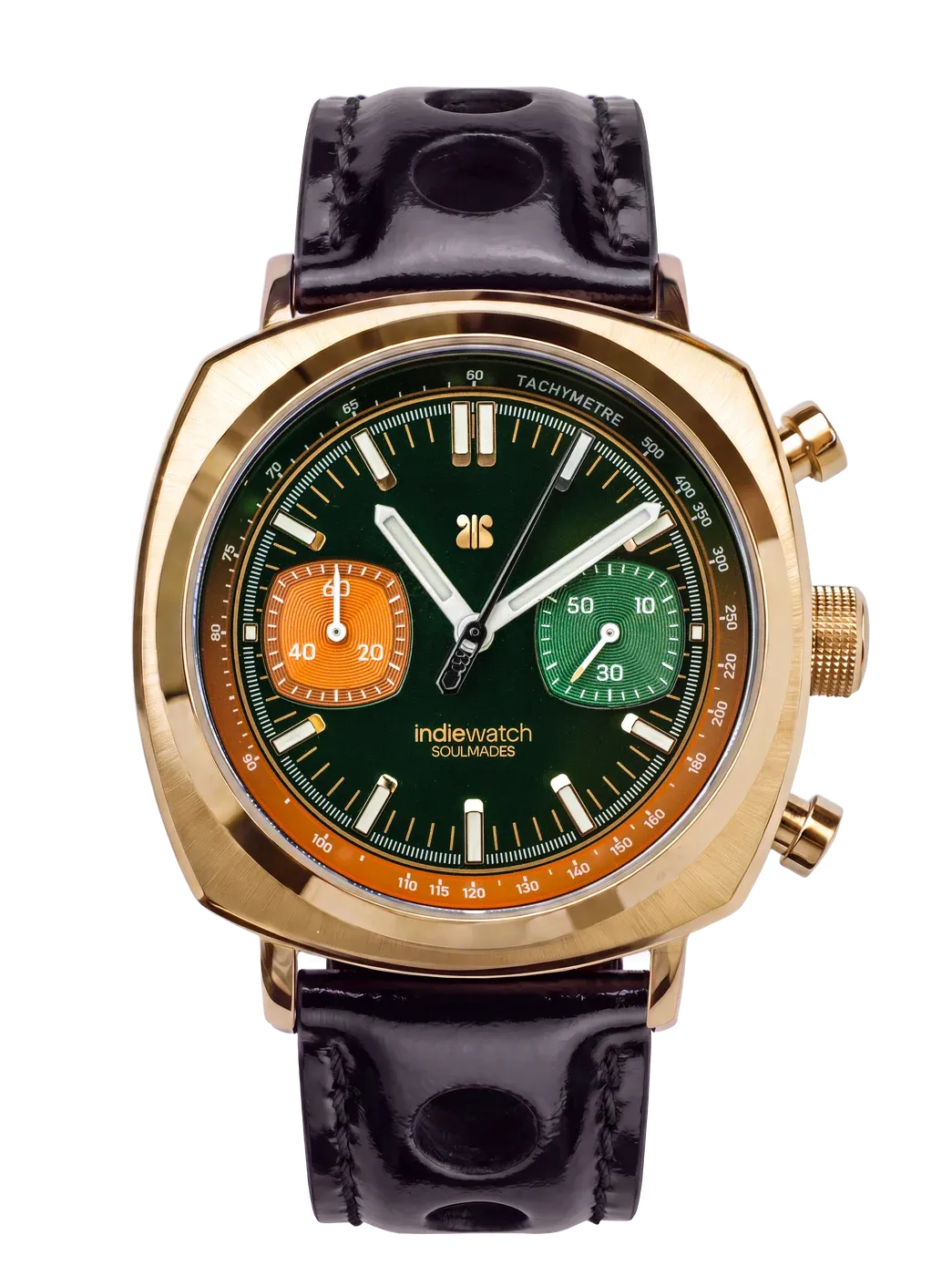
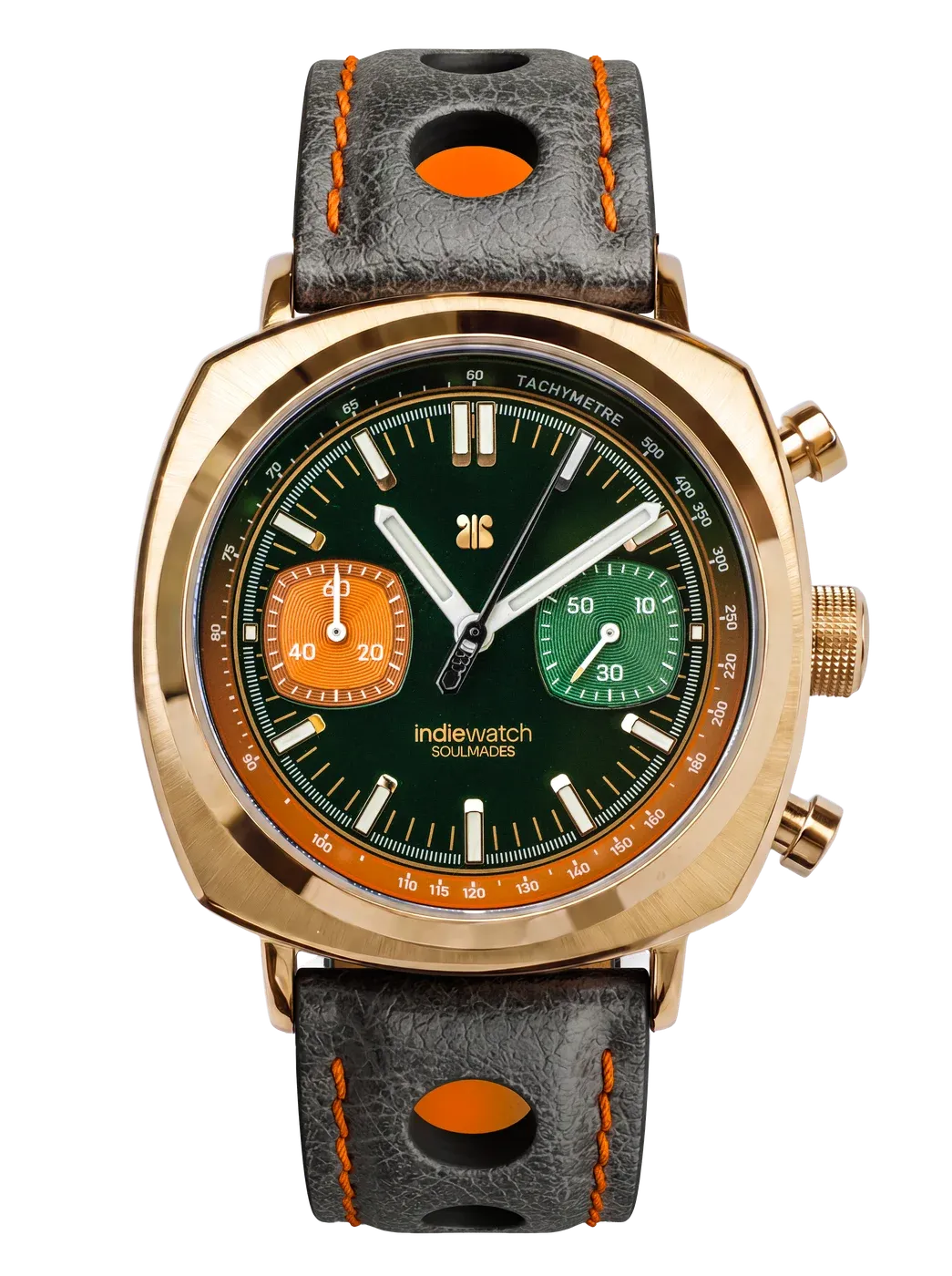
Forest green with orange and green sub-dials and a gradient flange. Engraved grey strap with orange lining. The colour of the blueprints and the light of the workshop at eleven o’clock at night.
VIEW MODEL →S113-ZL-BK · EL PILOTO
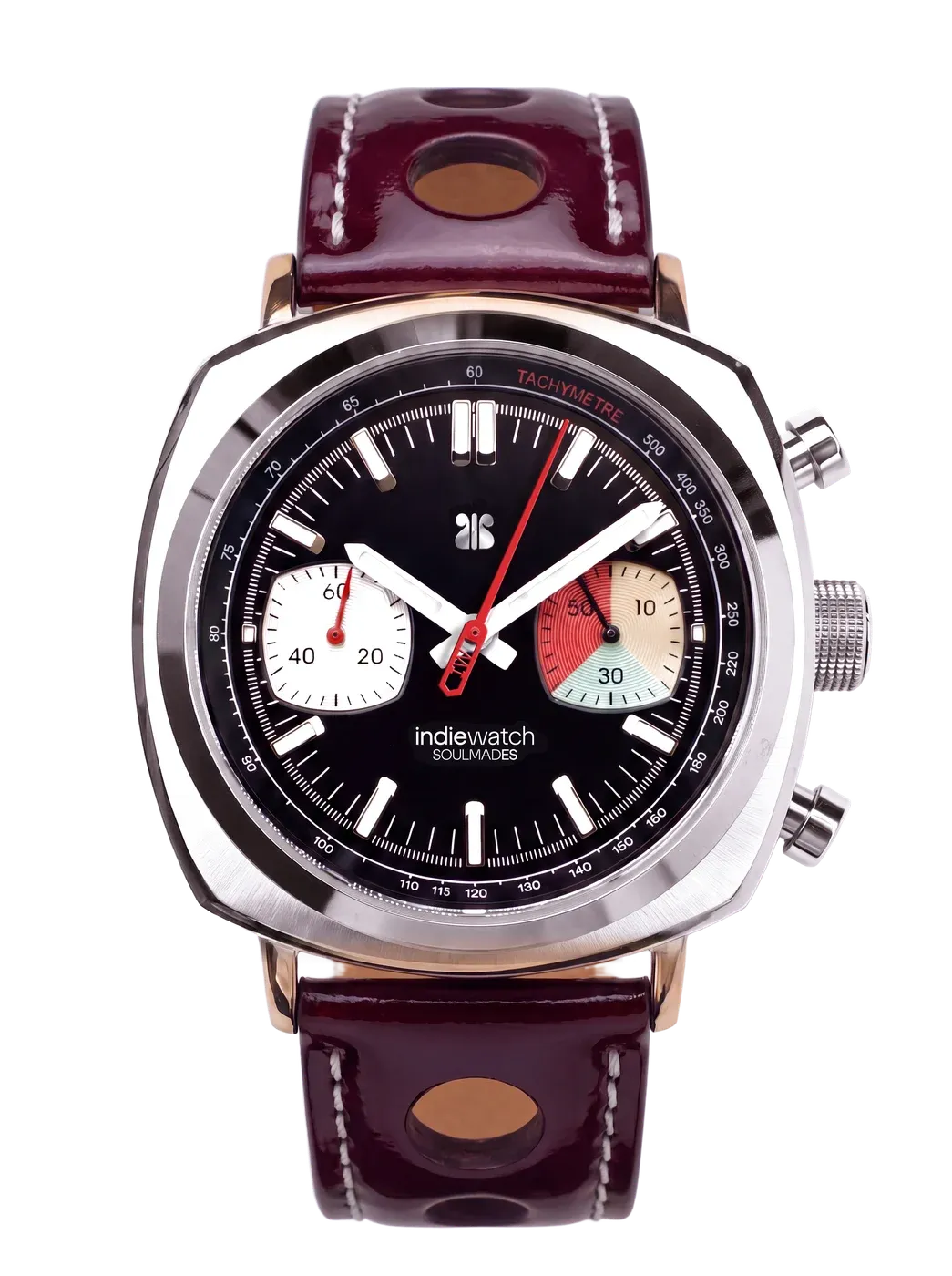
Racing black with tricolour sub-dials and a red chronograph hand. Burgundy Zuoletán strap. The dial that shouts fastest lap before anyone says it aloud.
VIEW MODEL →S113-O-CL · EL DEBUTANTE
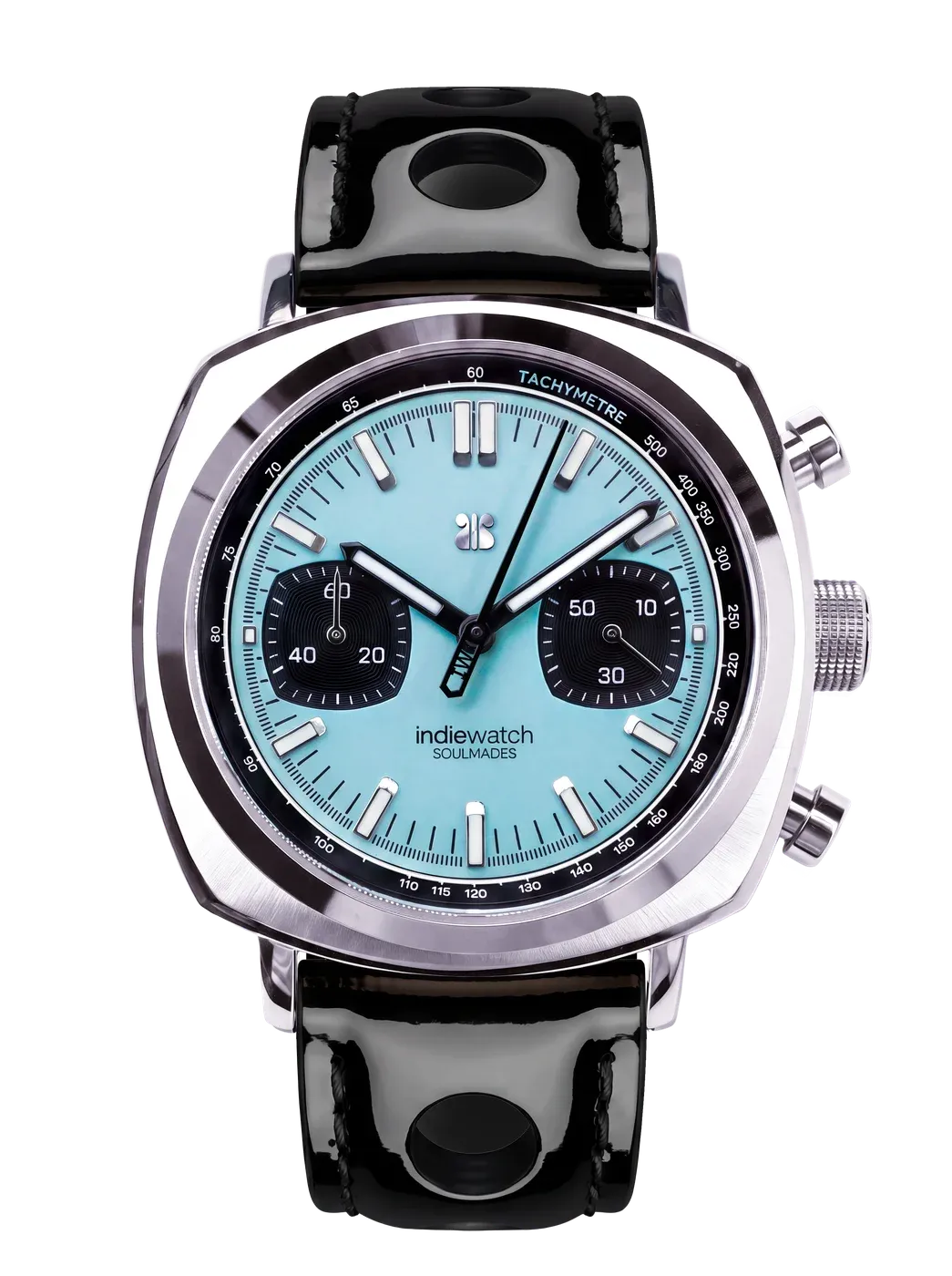
Plain sky blue with two black counters. Black Zuoletán strap. The sky in the early hours of the circuit, when everything is still to be proven.
VIEW MODEL →S113-RS-PK · EL FOTÓGRAFO
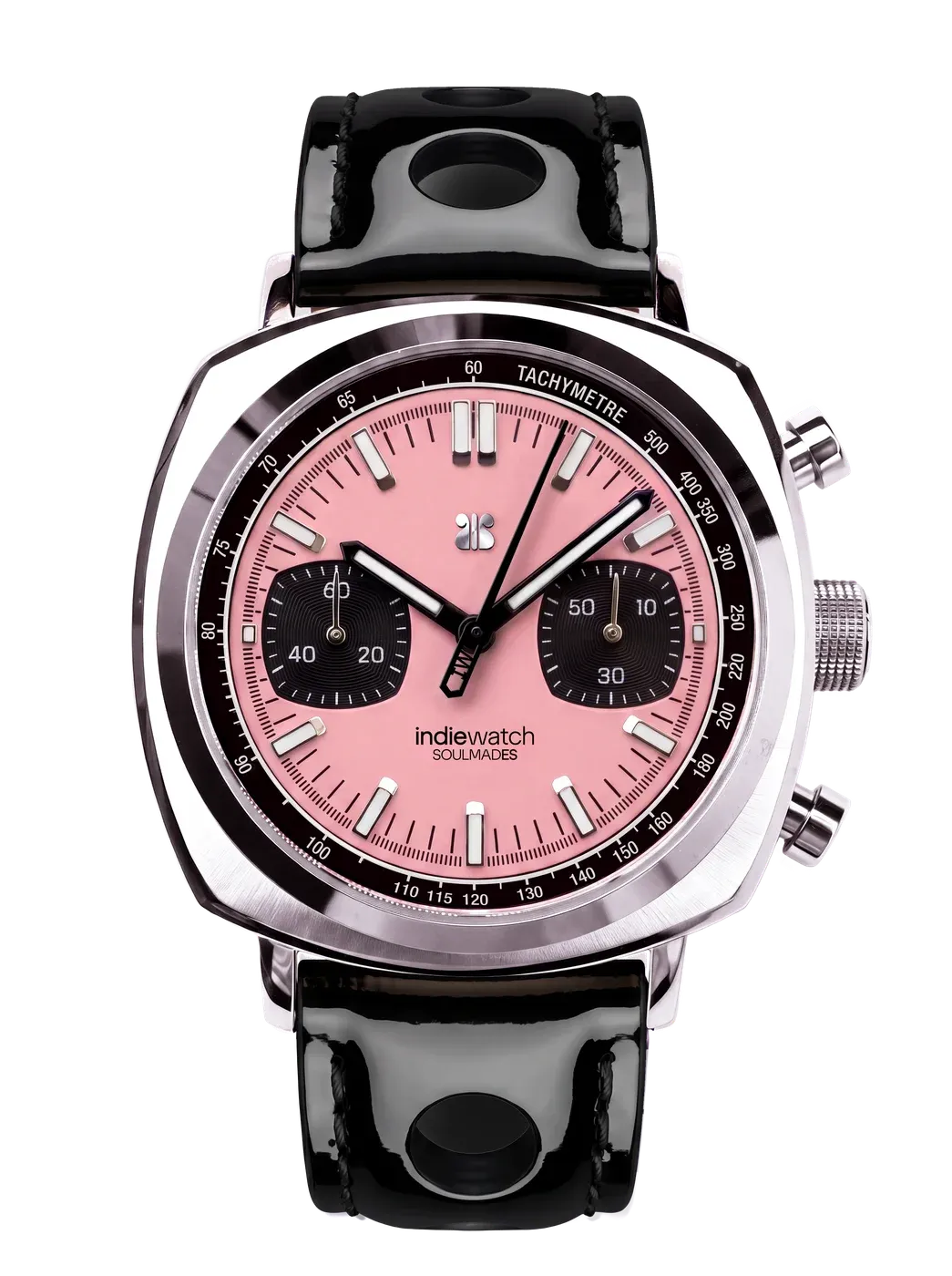
Pale pink with black counters. Black Zuoletán strap. The colour no one expects on a racing chronograph — and the one everyone remembers.
VIEW MODEL →S113-WQP-BG · EL PATROCINADOR
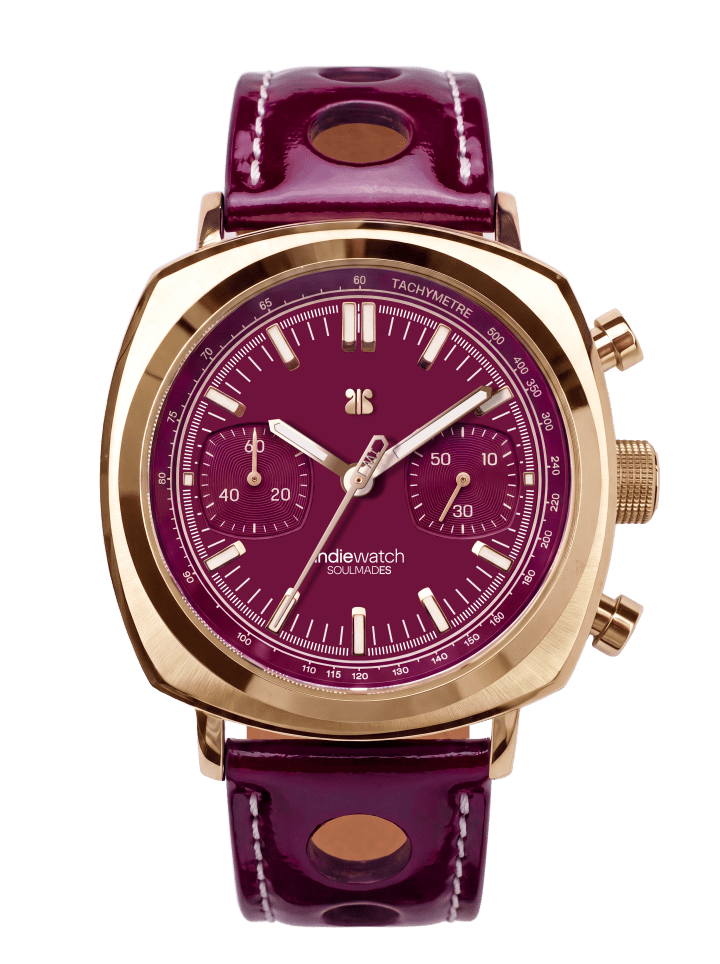
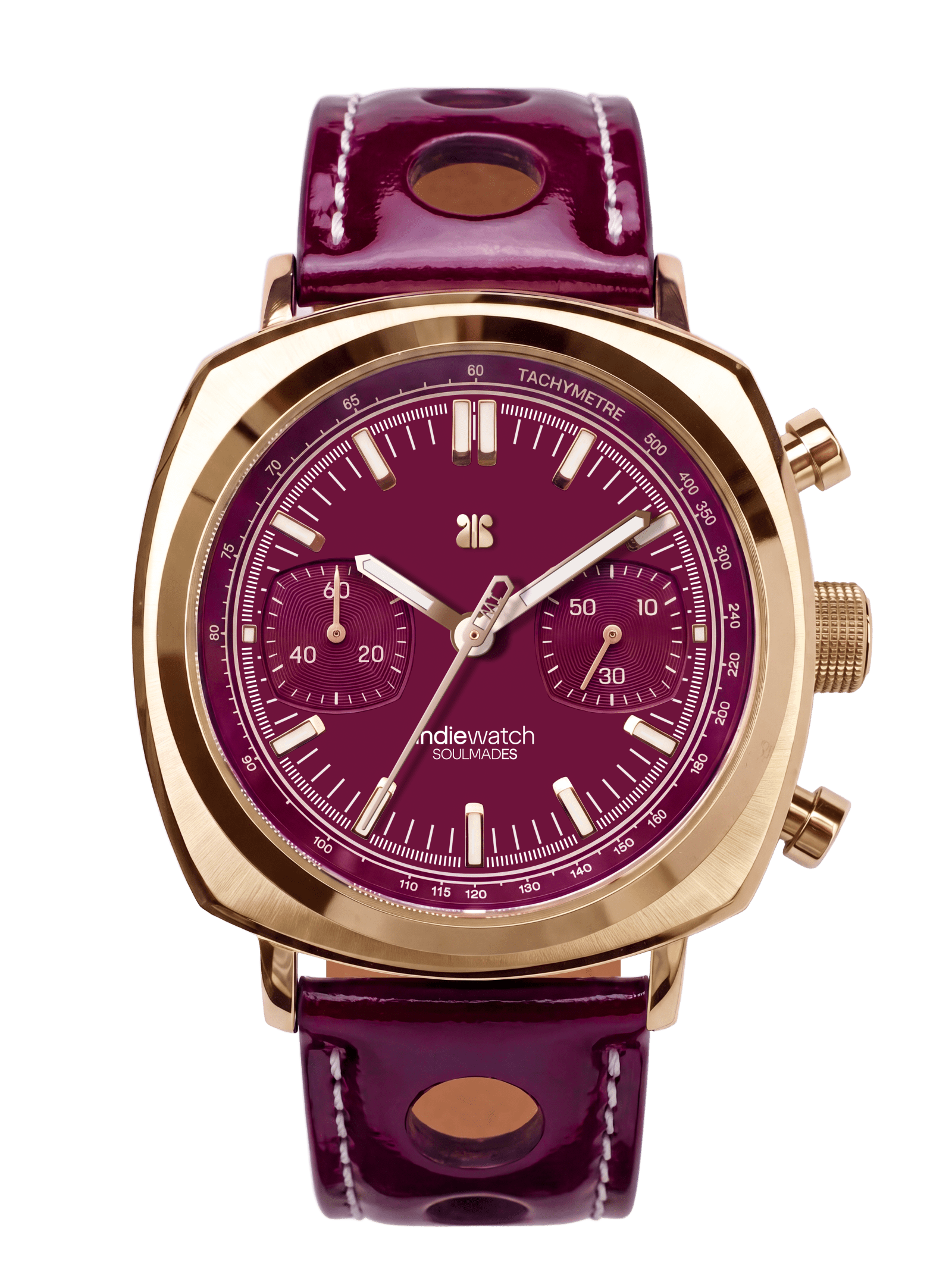
Ribbed burgundy beneath rose gold, the only one not drawn with the track in mind. Burgundy Zuoletán strap; also available in black FKM.
VIEW MODEL →S113-VBR-VB · EL MECÁNICO
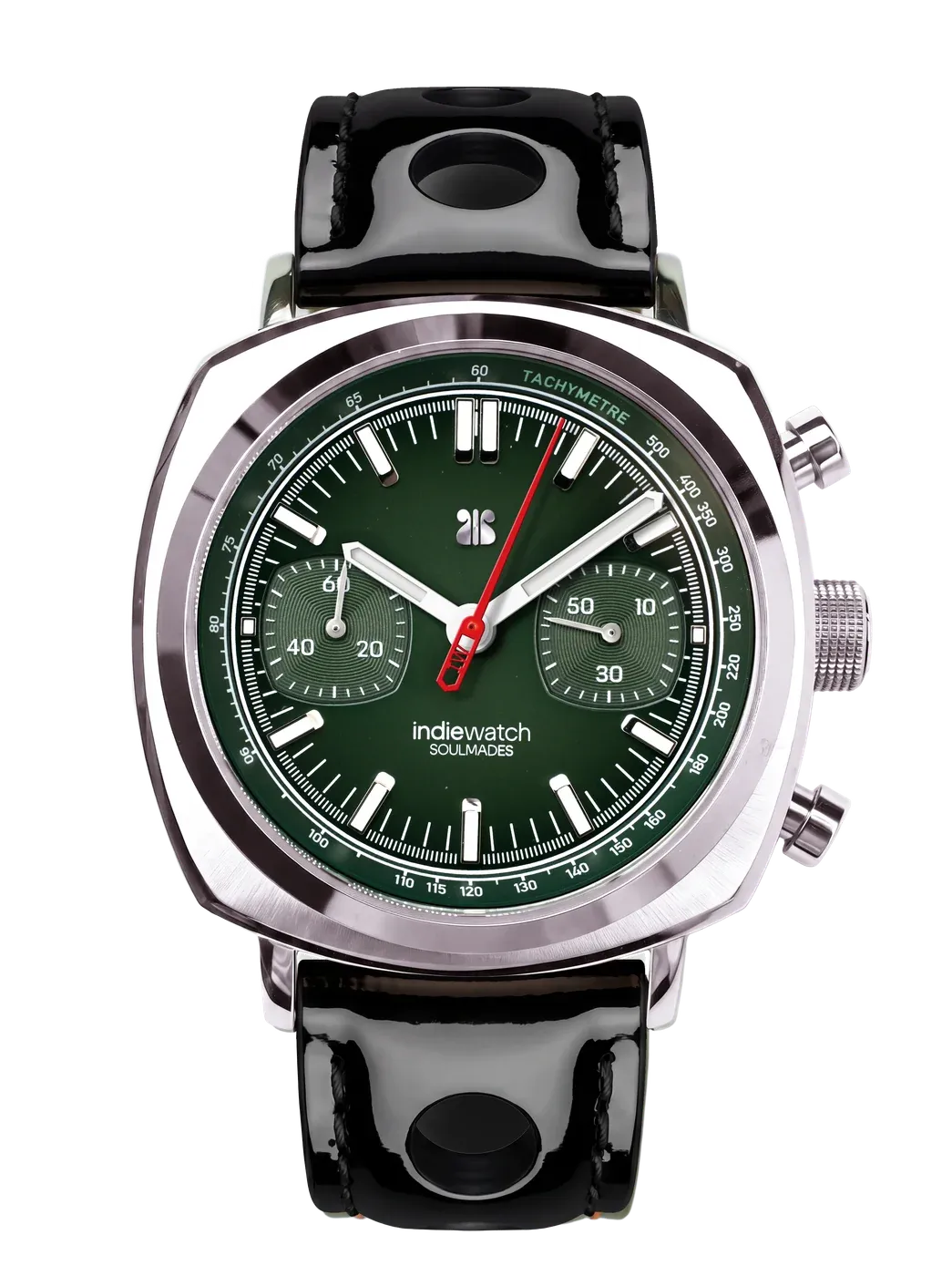
British racing green with guilloché counters and a red chronograph hand. The green of the overalls, the red of the second that decides a pit stop.
VIEW MODEL →S113-WR-VB · EL INGENIERO
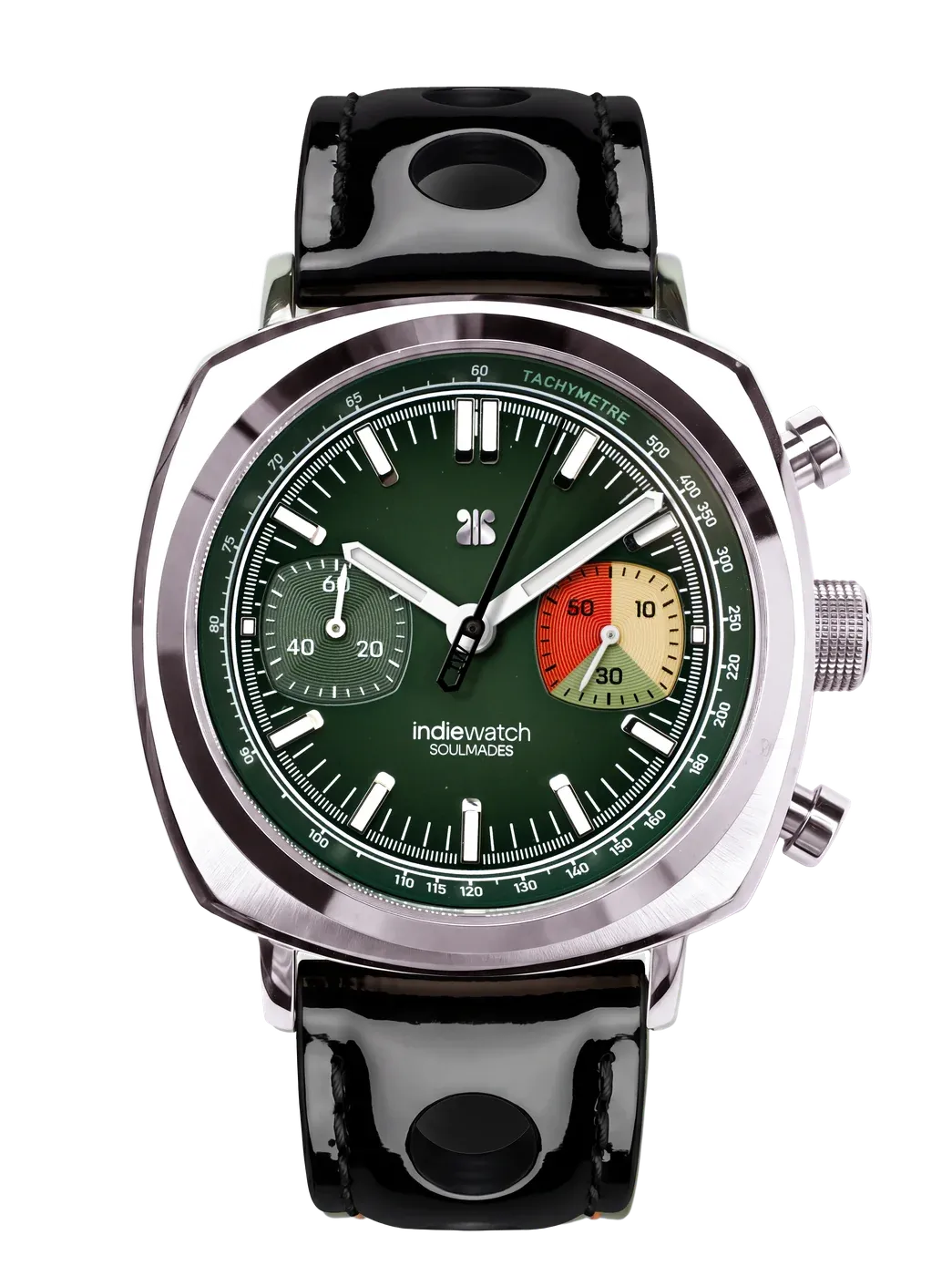
The same British racing green, with black hands and a counter split into a red sector and an olive sector: the engine’s limit, written within the dial.
VIEW MODEL →S113-GRC-AM · EL COMISARIO
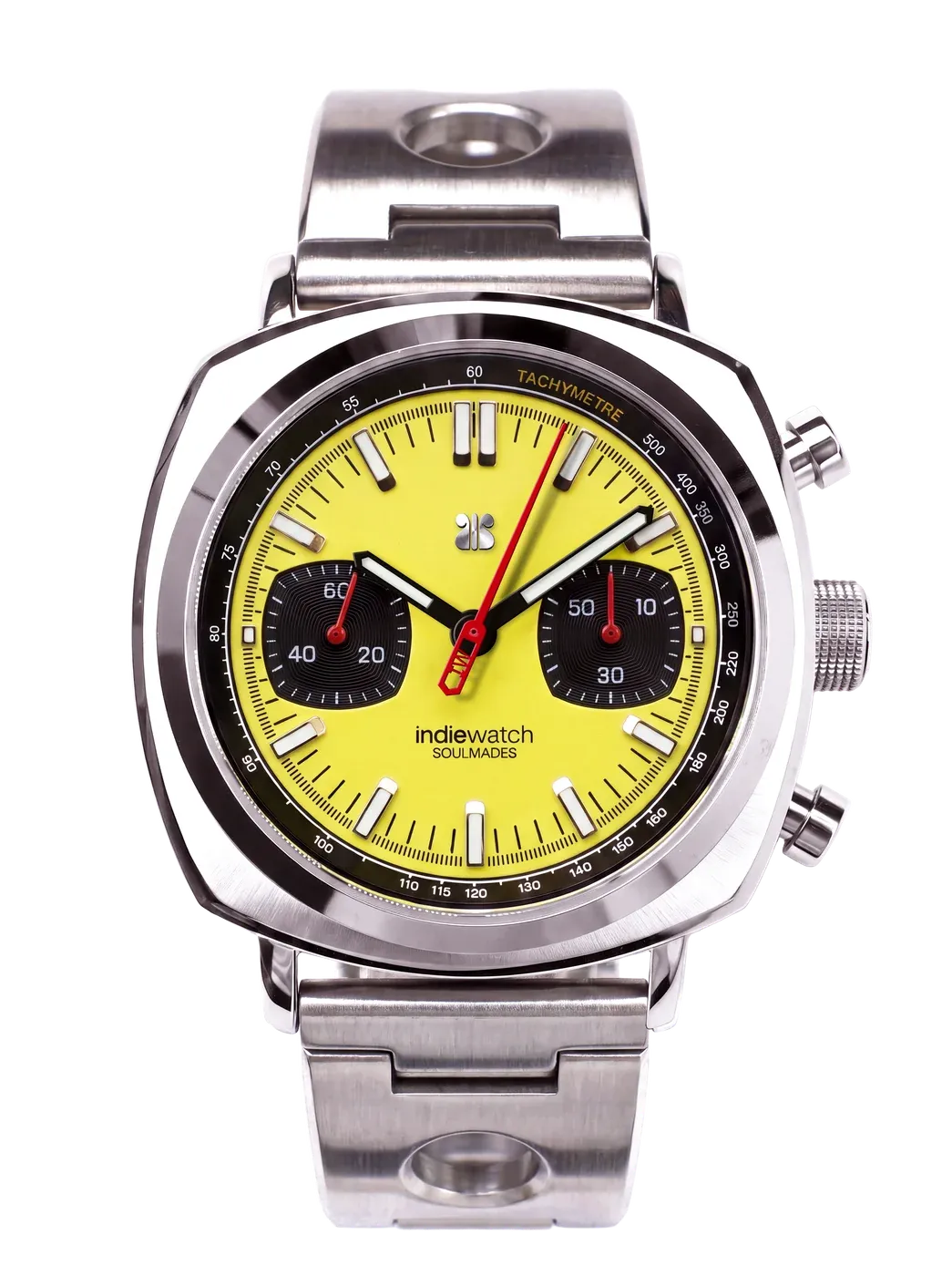
Yellow with black counters and red hands, on a steel rally bracelet. The colours with which warnings are given from the edge of the track.
VIEW MODEL →S113-MHJ-AZ · EL CRONISTA
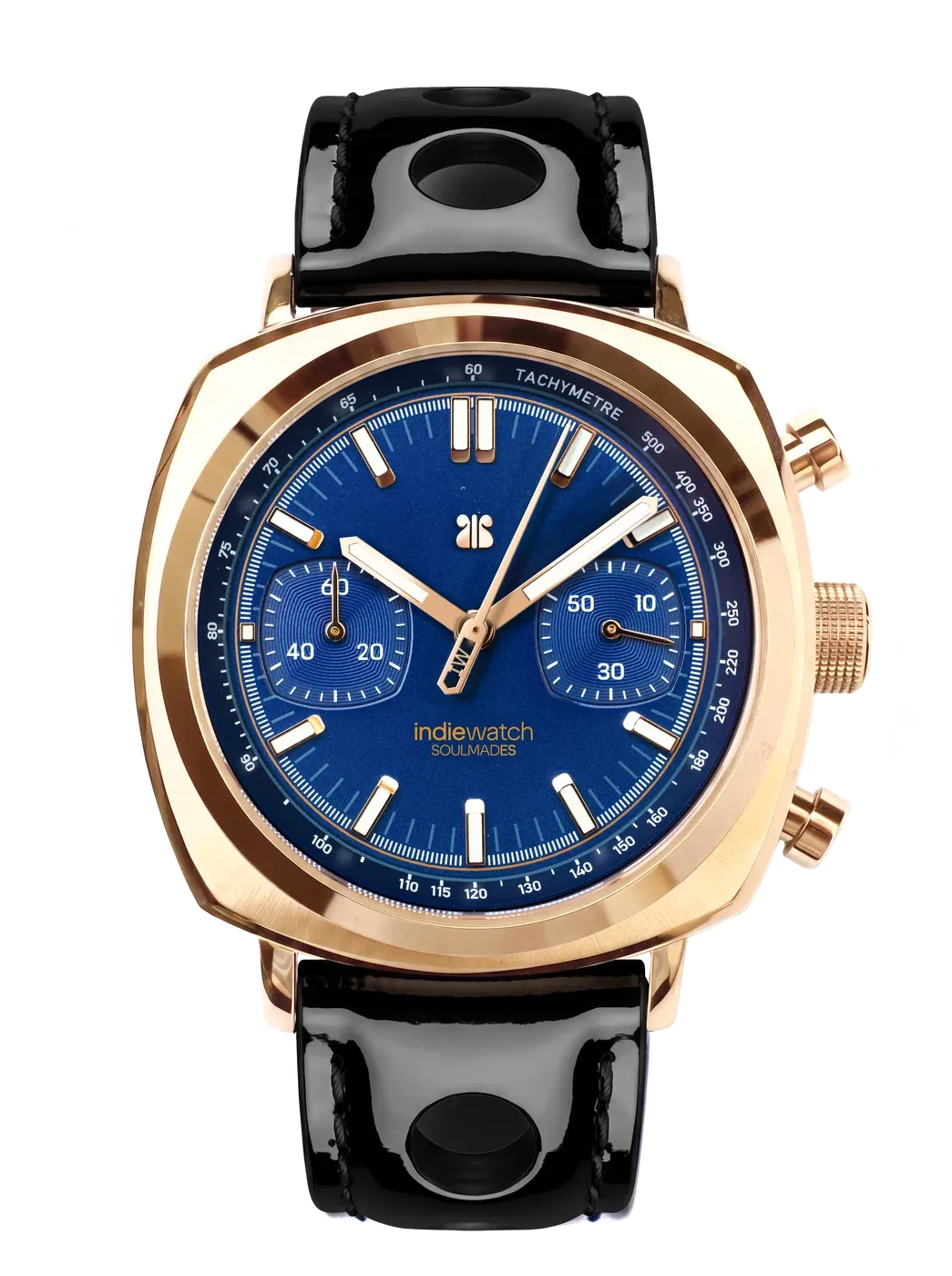
Electric blue beneath a rose gold case, with gilt hands and concentric guilloché. Blue of ink, gold of the nib.
VIEW MODEL →ON THE WRIST


“Work on the Z-102 was conducted as though in a laboratory; it was a school pursued regardless of cost, in which nothing was assembled unless it had attained the utmost quality.”

When time was sculpted by hand through the genius of a few pioneers

MADRID · BARCELONA · 1946 → 1958
In the ENASA halls at Barajas, Wifredo Ricart was drawing a light-alloy V8 with overhead camshafts and a tubular chassis. In 1951 the Pegaso Z-102 made its debut in Paris and, for a few years, it was the fastest production car in the world. Built by a country with no petrol, no foreign currency and no permission to dream.
At that very hour, in Barcelona’s Zona Franca, other engineers were raising bodywork by hammer upon wooden benches. Workshops of white coats and slide rules, where tolerances were measured with a micrometer and the finishing was settled with the tip of a finger.
The Strum Serie 113 captures that gesture and carries it to the wrist. The watch understood as an instrument rather than a jewel: a Japanese Miyota 6S21 quartz chronograph, hand-assembled in Spain. Soulmades — pieces made one by one, like those prototypes of old.
THE CRAFTS OF THE MACHINE
Twelve versions of the same gesture. One workshop, twelve crafts.
Electric blue beneath a rose gold case, with golden hands and concentric guilloché. Ink blue, nib gold.
“Of those workshops, what remains is what someone took the trouble to write.”
FOUR WAYS TO WEAR IT
The workshop overall, the pilot’s jacket, the owner’s suit and the draughtsman’s smock. Four trades, four ways to wear the same machine on the wrist.

01 · ZL — THE PILOT
The leather flight jacket
Racing black, tricolour subdials, chronograph hand in red. Burgundy serrano strap.

02 · X — THE TIMEKEEPER
The rolled-up shirt sleeves
White panda with black subdials and red accents. Black serrano strap.

03 · MXK — THE GENTLEMAN
The marled grey knit
Gold on black, golden chronograph hands. Black serrano strap.

04 · KUV — THE DESIGNER
The brown corduroy
Forest green, orange and green subdials, gold case. Engraved grey strap with orange lining.